
Industrial Parts Supplier in Germany: How to Choose the Right Partner for Precision OEM Components
The modern manufacturing environment, which is highly competitive, requires the selection of the appropriate industrial parts supplier as a key to the quality of products, cost-effectiveness, and timely delivery. To German OEMs and industrial buyers, the need to have precision industrial parts, robust supply chains, and ISO-certified manufacturing suppliers has never been greater.
It may be the automotive industry, it may be the machinery industry, it may be the electrical industry; the choice of a reliable industrial parts partner in Germany or even a global sourcing strategy business partner may directly influence your production performance and business survival.
Why Choosing the Right Industrial Parts Supplier Matters
A seasoned industrial parts supplier is not only a source of parts, but is a kind of strategic addition to your production floor. The safety margin is ultra-thin in a Just-in-Time production.
The major advantages of a right partnership are:
- Consistent Quality: Reaching small tolerances of complex industrial parts.
- Cost-Effective Production: Using global sourcing to keep the margins healthy without compromising standards.
- Streamlined Lead Time: Thorough turnaround times via efficient logistics and improved production planning.
- Custom Manufacturing Support: Professional support on complicated OEM initiatives through design and assembly.
In the case of German manufacturers, the collaboration with a trusted industrial parts supplier on OEM components guarantees adherence to the stringent European quality standards and industry-specific safety expectations.
Key Capabilities to Look for in an Industrial Parts Supplier
In assessing an industrial components manufacturer in Europe or an international partner, there are four capabilities that define their capability to handle high-stakes industrial projects:
1. Accuracy in Manufacturing Knowledge
The machining capabilities needed in modern industrial use are diverse. Look for suppliers offering:
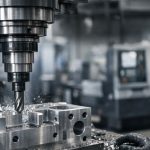
- CNC Machining: Turning and milling of high-precision parts of complex geometry.
- Sheet Metal Fabrication: Cutting, bending, and welding metal structures to a high degree of repetition.
- Stamped Metal Parts: Production involves the production of high-volume components such as brackets, panels, and heat shields.
2. Custom OEM Parts Manufacturing
An effective custom industrial parts manufacturer must offer end-to-end service, such as:
- Design Support: Fluid CAD and CAM support in order to optimize the geometry of the parts for manufacturability (DFM).
- Prototype Development: Rapid prototyping (to test fit and functioning) before mass production.
- Batch Flexibility: The capability to process special small batches and mass industrial production.
3. Quality Assurance and Certification
German consumers are reputed to be uncompromising in regard to quality. Your supplier must provide:
- ISO 9001 Certification: An international standard in quality management systems.
- Strict Testing: In-house Testing with highly sophisticated metrology equipment.
- Traceability: This entails a written record of material base and production records.
4. Material Versatility
The finest suppliers are professionals in dealing with a great variety of metals to accommodate varying environmental and mechanical requirements, such as Stainless Steel, Aluminum, Brass, Copper, and Carbon Steel.
Industrial Parts Supplier for German OEMs: What to Expect
German OEMs demand three things: precision, transparency, and performance. A supplier of industrial parts to German OEMs needs to fill the gap between technical quality and logistical effectiveness.
This involves:
- Engineering Alignment: Knowing more about the peculiarities of the DIN and ISO standards of German engineering.
- Good Communication: Open project management and English/German speaking technical support.
- Export Ability: Solid export to Europe, which prevents global sourcing, meaning global logistical headaches.
India vs. Germany: Choosing the Right Industrial Parts Supplier
A dilemma that many procurement managers are faced with is whether to source locally in Germany or outsource to global destinations such as India.
| Feature | Germany-Based Suppliers | Global Suppliers (e.g., India) |
| Precision | High engineering excellence | Comparable with modern CNC tech |
| Delivery Speed | Fast local shipping | Longer transit (balanced by inventory) |
| Production Cost | Higher labor/overhead | Highly cost-effective |
| Scalability | Often limited by capacity | High scalable production capacity |
To most of the customers, a direct sourcing partner, which resembles the German standard of quality and reflects its low-cost solution, is the best solution.
Industries That Rely on Industrial Parts Suppliers
A professional supplier can be the support base of the following important spheres:
1. Automotive Industry
The motor industry needs zero-defect parts. Some of the major components would be engine hardware, structural brackets, and machined chassis components that are capable of being supplied by Tier 1 and Tier 2 suppliers.
2. Electrical Industry
With support of custom enclosures and panels, heat sinks, and switchgear components, the electrical industry depends on sheet metal manufacturing and stamping to be durable and conductive.
3. Machinery & Equipment
Heavy machinery relies on the high-strength shafts, bushings, flanges, and spare parts that can withstand extreme wear and tear.
How to Choose the Best Industrial Parts Supplier in Germany
Here is a step-by-step process of checking out your next partner:
- Experience Evaluation: Search for a history of accuracy in the manufacturing of industrial components.
- Check Production Capabilities: Make sure they are equipped with the most recent CNC, VMC, and stamping technology.
- Test Quality Standards: You cannot just accept what they say as their ISO certifications and check their quality laboratories.
- Review Lead Time and Delivery: Require previous information regarding their delivery to Europe.
- Request Samples: A high-volume contract should never be concluded without a prototype performance and tolerance test.
Future Trends in Industrial Parts Supply
The industry is going through a digital transformation. A modern engineered industrial parts supplier has to be ahead of:
- Automation: The robotic cells and automated CNC paths are to be used to enhance the speed and precision.
- Sustainable Materials: The need to incorporate materials that are light and can be recycled to achieve green energy.
- Digital Supply Chains: Digital integration and real-time tracking of the buyer’s ERP and the supplier’s production line.
Conclusion: Choose the Right Partner for Long-Term Success
The components that come together in your industrial project are all that make your project a success. Through the use of high-precision CNC machining in Germany, you are guaranteed that your products are of the required technical standards and safety regulations of the German market.
Be it specialty custom OEM service to be provided, or a high volume of industrial components, selecting a business partner who realizes the fine line between accuracy and affordability is crucial to long-term growth. Visit BA Automotive to guarantee world-class engineering and export reliability in the world.
Meet with our engineering staff today and talk about the next project, and have them provide you with a precision-focused quote.
Frequently Asked Questions
Q1. What do I need to find in a Germany supplier of industrial parts?
Ans: Emphasis on ISO 9001 certification, enhanced CNC/VMC facilities, and an established track record with OEM projects. German customers must also be sure that the supplier is aware of the European engineering standards and possesses a good export experience.
Q2. Should it select a local or international industrial parts supplier?
Ans: The local German suppliers are better in terms of speed of delivery and contact, whereas the global suppliers are more economical in terms of costs and are more scalable with bulk orders. To ensure cost-precision balance, many OEMs select international partners that reflect the German quality levels.
Q3. What are the most common industrial parts suppliers in the industry?
Ans: These services are used mainly in the automotive, electrical, construction, and heavy machinery industries. They depend on suppliers of high-precision parts, custom manufacturing, and high-volume assembly of parts that satisfy stringent safety standards.
Q4. What sort of components does an industrial parts supplier supply?
Ans: Professional suppliers offer a series of CNC machined components, stamped sheet metal components, and brackets, as well as custom enclosures. They also provide specialized tooling, die-casting, and assembling of services according to OEM-specific technical drawings.
Q5. What about quality assurance in the case of an industrial parts supplier?
Ans: The ISO certifications should always be verified, physical samples should be requested to be tested, and their quality control infrastructure should be checked. The suppliers will be reliable and provide full transparency of their inspection procedures and material tracking of each batch made.
 Previous Post
 Next Post