
Sheet Metal Fabrication in Germany for OEM and Industrial Components
Considering the fact that the modern manufacturing world is high stakes, sheet metal fabrication is the literal canvas on which industrial innovation is painted. From the smooth surface of an electric vehicle to the rough nests that cover the industrial servers, the quality of the manufactured metal parts can define the longevity, safety, and success of the end product.
To German OEMs and engineering companies, sourcing of industrial sheet metal fabrication is no longer about identifying a supplier; it is about identifying a strategic partner. With the increasing energy costs and labour limitations in the sheet metal fabrication services in Europe, it is important to know how to negotiate the fabrication environment to stay competitive in the precision industry.
Why Sheet Metal Fabrication Matters in Modern Manufacturing
The sheet metal is valued due to its versatility and strength-to-weight ratio. It is still the cheapest way of mass production. Components need to be a flawless engineered interface in precision industries such as robotics and medical technology.
The Principle of OEM Production
OEM production is based on fabrication. It enables the quick production of one prototype to thousands of the same. All its pieces are to be precisely specified to be distributed worldwide. One malfunctioning component is enough to stop a complete assembly line. It is now as important as the design that you have as reliable a fabricator as you have.
Common Challenges in Sheet Metal Component Production
It is not easy to make precision sheet metal products. Manufacturers still have to deal with repeated problems, even with the use of modern machines:
- Tolerance Errors: Assembly lines are based on parts that are plug-and-play. A variation of 0.5mm can render tight-tolerance sheet metal products useless. This leads to costly reworks.
- Material Stress: When welding, poor bending of metal or overheating of the base material makes the metal weak. This makes components malfunction under operational pressures.
- Surface Defects: Scratches or irregular powder coating cause rust. This is essential in components that would be applied in the outdoors or at sea.
- Lead Time Delays: In a Just-in-time model, there is one delay that propagates in the chain. This translates to lost delivery schedules by the OEM.
What German OEMs Expect from Fabrication Partners
German engineering is equivalent to the quality of the “Mittelstand,” characterized by reliability, precision, and transparency. A German OEM sheet metal supplier needs to do more than just the bare minimum. They would want a partner who comprehends the philosophy of Zero Defect.
- ISO Certification: The company would need to work with an ISO-certified sheet metal fabrication company, which is a non-negotiable requirement. It will ensure that the supplier has documented repeatable processes.
- Technical Consultation: A good supplier of sheet metal fabrication to the company gives Design for Manufacturing (DFM) feedback. They can save on material waste and streamline the bending process by proposing minor design changes to save on overall costs.
- Extensive Documentation: German consumers demand complete material traceability, such as Mill Test Reports (MTR) and final inspection reports, in order to be sure that every part is manufactured in accordance with safety and other regulatory regulations.
From Design to Delivery: How Fabrication Works
The metal part process is comprised of a series of very technical processes, and most of them are powered by CNC sheet metal fabrication technology.
1. Cutting & CNC Processing
Currently, cutting sheet metal processes using high-fiber lasers are used to achieve clean edges and complicated geometries. Compared to the old-fashioned punching, fiber lasers can be cut through high-density stainless steel or reflective aluminum at a very high rate and with a very small area of heat influence.
2. Forming & Bending
Bending and forming of sheet metal is performed using synchronized CNC press brakes, and converts a flat profile to a complex 3D structure. Exactness is important here; state-of-the-art software needs to take into consideration the concept of spring-back (the inclination of metal to resume its original shape) so that the end angle is correct to a fraction of a degree.
3. Welding & Assembly
Professional metal welding and fabrication include TIG, MIG, and Spot welding. In the case of OEM components, the weld should be as robust as the base material itself. Robotic welding is becoming more popular so that all of the joints in the run of 1,000 units are identical.
4. Surface Finishing
Elements such as powder coating, galvanization, or anodizing are special treatments applied to parts to prevent corrosion. This gives the aesthetic value to consumer-facing products and the environmental protection to industrial equipment.
Choosing the Right Material for Your Application
The material selection determines the component life. It influences the corrosion resistance and thickness of the material:
- Stainless Steel Sheet Metal Fabrication: It is ideal in food, medical, and marine markets where hygiene is very crucial.
- Aluminum Sheet Metal Fabrication: It is very popular in the car industry because it is light weight and resistant to rust.
- Carbon Steel: The industrial powerhouse. It is very strong and is used as heavy machinery, which is typically coated with a strong powder.
- Copper & Brass: These metals are needed in the electrical parts because of their high thermal and electrical conductivity.
Where Sheet Metal Components Are Used
1. Automotive Industry
In Germany, fabrication of sheet metal in the automotive sector is centred on high-precision internal parts, including chassis brackets, engine heat shields, and specialised battery enclosures in the growing electric vehicle (EV) market.
2. Electrical Enclosures
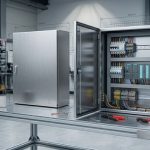
Electrical enclosures require precision sheet metal component parts to provide protection to the sensitive control systems. Such enclosures should be manufactured to follow certain IP ratings (such as IP65 or IP67) to be dustproof and waterproof in a brutal factory environment.
3. Machinery & Construction
Sheet metal is the structural backbone of industrial infrastructure, with heavy-duty side panels serving manufacturers of machinery, structural supports, and wall brackets serving manufacturers of construction equipment.
Cost Comparison: Germany vs. Global Manufacturing
A lot of procurement managers compare the prices of sheet metal fabrication in Germany and India to their production budgets.
| Feature | Germany-Based Fabricators | Global Manufacturers (e.g., India) |
| Labor & Overhead | Significantly Higher | Highly Cost-Effective |
| Technological Edge | High-End Automation | Modern CNC & Fiber Laser Centers |
| Prototyping Speed | Fast (Local Presence) | Fast (Digital CAD/CAM Collaboration) |
| Bulk Scalability | Often Limited by Capacity | High Volume Capacity |
In the case of a bulk sheet metal parts manufacturer, the global sourcing strategy can result in cost savings of 30 to 45 percent. When making a selection of a partner that meets European quality standards, the OEMs will get high-volume accuracy without including a high-end domestic price tag.
How to Choose a Sheet Metal Fabrication Company
To find the most suitable sheet metal fabrication company in Germany or any other global sourcing partner, the following checklist may be used:
- Check Equipment: Are they equipped with fiber lasers and 5-axis CNC press brakes?
- Check Certifications: Do they have ISO 9001:2015 certification of quality management?
- Assess Logistics: Are they capable of supplying sheet metal fabrication and delivering it in a short timeframe, and managing the customer in the European market?
- Review Portfolio: Have they been able to provide accuracy of sheet metal components to Tier 1 automotive or electrical companies?
Trends in Sheet Metal Fabrication
The industry is shifting towards Smart Manufacturing. Key trends include:
- Robotic Automation: More cobots (collaborative robots) should be used in welding and handling materials.
- Green Fabrication: Switching to low-energy laser systems and metal alloys that are 100 percent recyclable, which can be used to achieve the Green Deal sustainability objectives.
- Digital Twins: Simulating the bending and welding process of the sheet metal part using virtual models of the part before the first piece of metal is even cut.
Conclusion: Sheet metal fabrication
When competing in the arena of German engineering, the most valuable thing to have is the reliability of your components. Both in their need of complex assemblies or high-volume precision sheet metal parts, the idea is to find a partner that will strike a balance between technical activity and cost-efficiency that will yield long-term growth.
World-class custom solutions, precision engineering, and committed OEM support are found in BA Automotive.
Interested in engaging contracting services, contact our engineering department today and present your unique project needs, and you will be quoted at length and in detail.
Frequently Asked Questions
Q1. What is sheet metal fabrication?
Ans: It simply involves the transformation of sheets of flat metal into constituents by cutting, bending, and assembly.
Q2. Which materials are best?
Ans: Aluminum is ideal in weight, stainless steel in hygiene, and mild steel in strength.
Q3. What industries use it most?
Ans: Its main users are automotive, aerospace, electrical, medical, and construction.
Q4. Which company in Germany do I pick?
Ans: Check on ISO certification, hi-tech CNC equipment, and experience in high-tolerance OEM components.
Q5. What is the cost?
Ans: The prices are based on the materials, complexity of the design, and volume. Bulk sourcing at international centers such as India will save significant amounts of money.
 Previous Post
 Next Post